
How Much Does an Inground Pool Cost in Ontario? (2026 Guide)
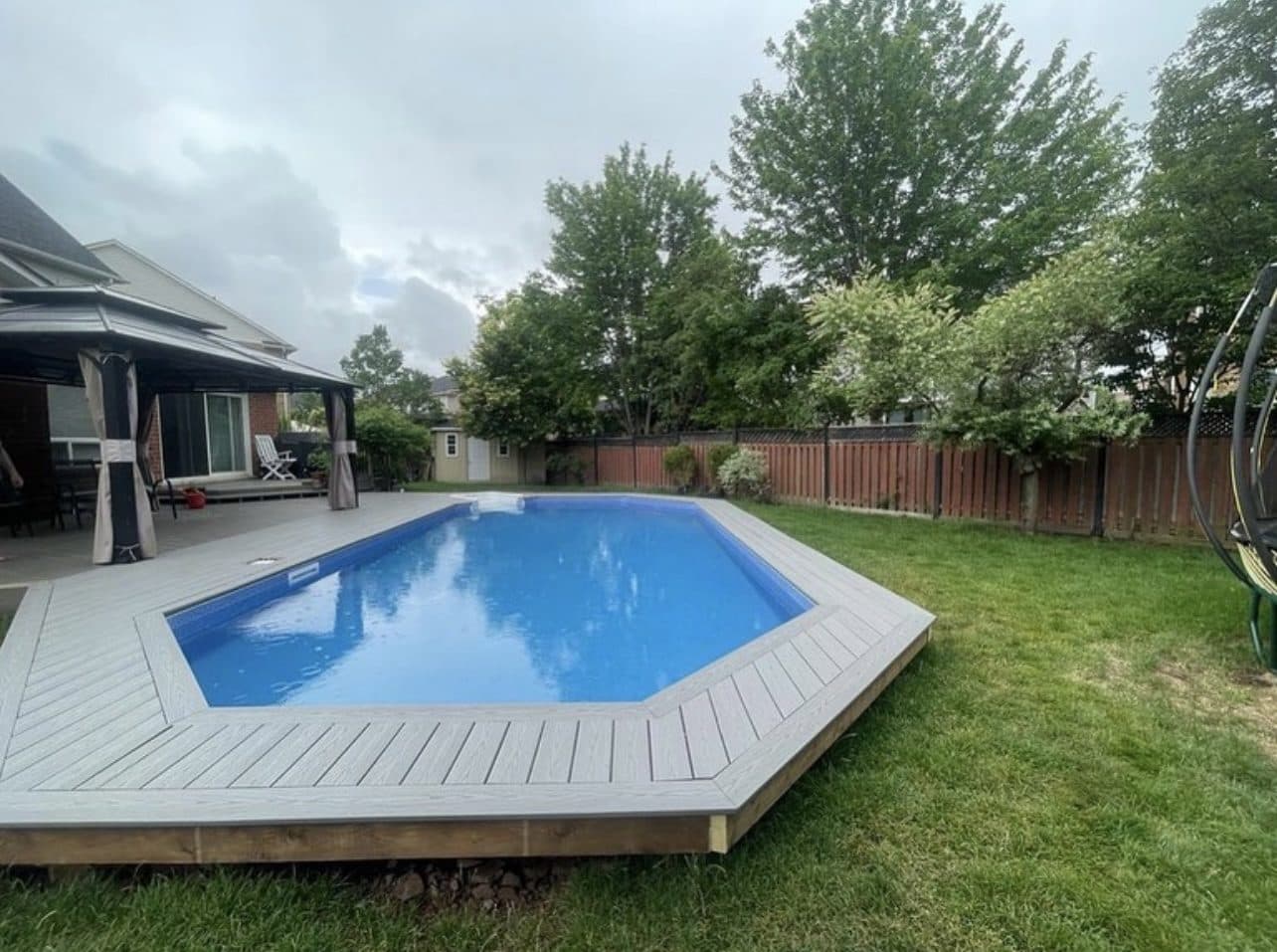
An inground pool is one of the largest single investments you can make in a property, and pool pricing in Ontario is notoriously opaque. This guide lays out what complete inground pool projects actually cost in 2026, why the number on the first quote is rarely the number you finish at, and the site-specific costs that catch homeowners by surprise.
As with any cost guide, these are typical Ontario market ranges to help you budget, not a quote. Pools are the most site-dependent project in outdoor construction, and the honest final number only comes from a site assessment.
The 2026 Ranges by Pool Type
| Pool type | Typical 2026 installed range | Build time | Design freedom | Main long term cost |
|---|---|---|---|---|
| Vinyl liner | $60,000 to $95,000 | Moderate | Good, panels built to shape | Liner replacement every 10 to 15 years |
| Fibreglass | $75,000 to $120,000 | Fastest | Limited to manufacturer moulds | Lowest of the three |
| Concrete (gunite) | From about $100,000, commonly $150,000 to $200,000 | Longest | Unlimited | Resurfacing as the finish ages |
Vinyl-liner pools are the most affordable entry to inground swimming, with most complete Ontario installations landing between $60,000 and $95,000 in 2026. The liner itself needs replacement roughly every 10 to 15 years, which is the trade-off for the lower entry price.
Fibreglass pools, the fastest-growing category, typically run $75,000 to $120,000 installed. The shell arrives pre-formed, installation is faster, and lifetime maintenance is the lowest of the three, though shape and size options are fixed by the manufacturer's molds.
Concrete (gunite) pools are the fully custom option, and most Ontario builds start around $100,000 and commonly reach $150,000 to $200,000 or more with custom features. You are paying for unlimited design freedom and the longest structural life.
Vinyl, Fibreglass, or Concrete: How They Actually Differ
The price gap between the three comes from how they are built, and that same difference decides how each one lives over twenty years.
A vinyl pool is a structure of steel or polymer wall panels set on a footing, with a fitted liner stretched over the whole thing. The liner is the waterproofing, the finish, and the wear item all at once. It is comfortable underfoot and inexpensive to install, but it can be punctured, and the replacement cycle is a real cost to plan for rather than a surprise.
A fibreglass pool is a single moulded shell that is craned into an excavated hole and levelled. Because the shell arrives finished, the disruptive part of the build is short. The gelcoat surface is non-porous, which means less to brush and generally lower chemical demand than concrete. The constraint is that the shell has to travel by road, so size and shape are limited to what the manufacturer moulds and what can physically reach your yard.
A concrete pool is sprayed over a steel reinforcing cage and then finished with plaster, aggregate, or tile. Any shape, any depth, any feature. It is the longest build and asks the most maintenance over time, because the surface is porous and will eventually need resurfacing, but nothing else offers the same freedom.
Fibreglass Pool Cost, and Why the Range Is Narrower
Of the three, fibreglass pool cost is the easiest to pin down early. The shell is a manufactured product with a list price, so the part of the quote that usually moves, the building of the pool itself, is largely fixed before anyone arrives. What varies is the site work around it: excavation, backfill, the equipment pad, and the surround.
That predictability is the main reason people choose it. The $75,000 to $120,000 range above holds for most complete installations, and the spread inside that range is mostly shell size and what the yard demands, rather than surprises in construction.
It is also the cheapest of the three to own. The gelcoat surface is non-porous, so it holds less algae and generally asks for fewer chemicals and less brushing than concrete. There is no liner to replace on a 10 to 15 year cycle, and no resurfacing due for a long time.
The trade-off is choice. You are picking from moulds, so shape, depth, and features are whatever the manufacturer makes. The shell also has to reach your yard on a truck and be craned into position, which quietly rules it out on some lots regardless of budget. If the design you want does not exist as a mould, or access will not take the shell, concrete is the honest answer even though it costs more.
What Your Site Does to Inground Pool Cost
Two identical pools on two different lots can be tens of thousands apart, and almost none of that difference is the pool.
Access decides the most. A yard reachable by machine through a wide side gate is straightforward. A narrow gap means smaller equipment and more hours, and a fully enclosed rear yard means the excavator and the shell come over the house by crane, which is a scheduled, street-level operation rather than a detail.
Then there is the ground itself. Rock changes excavation from digging to breaking. A high water table means dewatering during the build, and hydrostatic relief designed into the pool so it cannot float when it is emptied. Previously filled or disturbed soil may need to come out and be replaced with engineered fill. None of this is visible when you are looking at a flat lawn.
Services matter too. The distance from your electrical panel to the equipment pad, and whether that panel has capacity left, decides the electrical cost. A gas heater needs a line sized for it and run from the meter. And every cubic metre of excavated soil has to go somewhere, which is trucking, priced by the load.
The Costs That Are Not in the Pool Quote
The pool is only part of the project, and this is where budgets go sideways. Excavation and site access come first: a rear yard with no side access may need soil hauled through a narrow gap or even craned, and rock or high groundwater changes the excavation math entirely.
Ontario municipalities require pool enclosure permits and fencing that meets local bylaws, and fencing a typical yard properly runs from a few thousand dollars to well past ten for glass panels. Electrical and gas runs for pumps and heaters, and the grading and drainage work around the pool, add more. Then there is the part everyone actually sees: the surrounding patio, coping, and landscaping that turn a hole with water in it into a backyard. Depending on finishes, surrounds commonly add 20 to 40 percent to the total project.
Budgeting honestly from the start, with the surround included, is the difference between a resort backyard and a pool sitting in construction limbo for a season.
Pool Enclosure Rules Across Ontario
Every Ontario municipality regulates pool enclosures, and the permit is generally required before the pool is filled, with many municipalities wanting it in place before excavation begins. The common baseline is a fence at least 1.2 metres high with a self-closing and self-latching gate, which is the standard the City of Toronto sets out in its pool enclosure bylaw.
The details vary more than people expect. Required heights, how close a climbable object may sit to the fence, whether a house wall can form part of the enclosure, and how a hot tub or swim spa is treated are all set locally. Confirm the specifics with your own municipality before the fence is designed, because a fence built to the wrong standard is a rebuild rather than an adjustment.
Permits and Timelines in Halton and Peel
Pool permits in Oakville, Burlington, Milton, and across Halton and Peel typically take several weeks, and spring applications queue up fast. If you want to swim next summer, the planning and permit work should start in fall or winter. Grading plans matter too: municipalities want to see that your pool will not redirect water onto a neighbour's lot, which is exactly the kind of drawing our drawings and permits team prepares.
What It Costs Once the Pool Is Built
Running cost is the part almost no quote covers, and it varies more by equipment choice than by pool size.
Heating is the single biggest lever. A gas heater brings the water up quickly and is the practical choice for a pool you want warm on demand, but it is the most expensive to run. A heat pump costs considerably less per season and suits owners who hold the pool at a steady temperature, with the caveat that its efficiency falls as the air cools, which shortens the shoulder season. Solar is the cheapest to run and the least controllable.
The pump is the next lever, and it is the easy win. A variable speed pump running longer at low speed uses a fraction of the electricity of a single speed pump running short cycles, and it is quieter. Beyond that, expect seasonal opening and closing, a safety cover, and ongoing water chemistry, where a salt system trades a higher up-front cost for lower routine handling.
Across the three types, fibreglass is generally the lightest on chemicals and brushing, vinyl sits in the middle, and concrete asks the most.
Phasing and Alternatives
If the total is beyond this year's budget, two honest options exist. Phase the project: pool and safety essentials first, premium surround the following season. Or consider a swim spa, which delivers year-round swimming at a fraction of the cost and footprint; we compare the two directly in our swim spa vs pool guide.
Conscape builds pools as part of complete backyard projects, from excavation and grading through the stonework and landscaping around them, across Oakville, Milton, Burlington, and the GTA. If a pool is on your horizon, request a quote and we will give you a real, site-specific number, surround included.
More where this came from
Project ideas, seasonal maintenance tips and what we are building around the GTA. One email a month, and you can leave any time.