
Protecting Interlock and Concrete From Salt This Winter
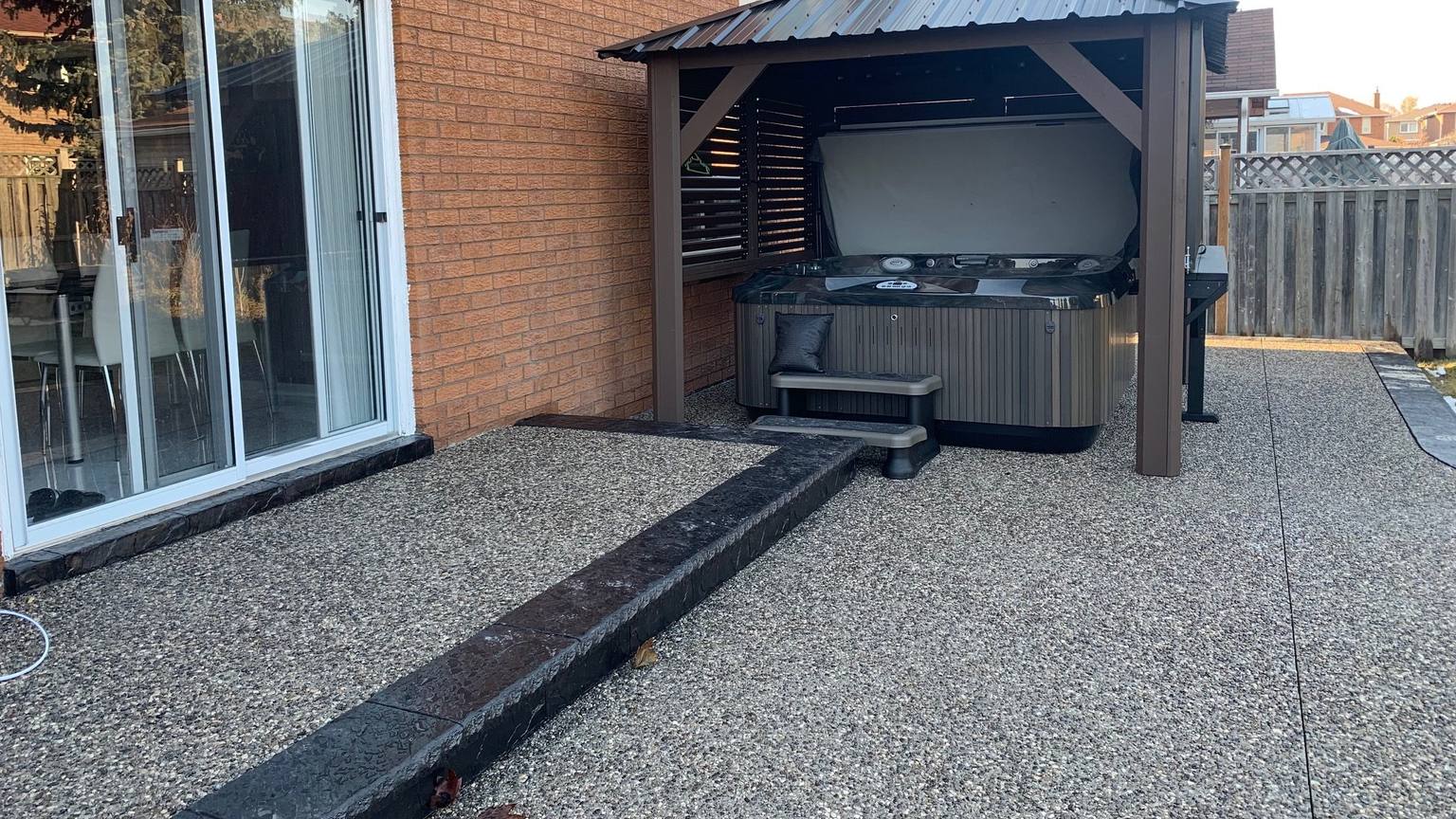
Most of the winter damage we see on GTA driveways and patios in spring was not done by the cold. It was done by the bag of salt by the back door, and by the shovel or plow blade that went over the surface every morning. Interlock and concrete react to salt differently, so the habits that protect one are not quite the same as the ones that protect the other. Here is what we tell homeowners in Toronto, Mississauga, Oakville, Burlington, and Milton about getting their hardscape through a winter.
Winter Care at a Glance
| Winter care | Concrete | Interlock |
|---|---|---|
| Main salt risk | Surface scaling and flaking, worst on a slab in its first winter | Joint sand washing out faster, and a white residue on the surface |
| De-icer | None in the first winter, sand instead. After that, as little as clears the ice | As little as clears the ice |
| Never use | Products containing ammonium nitrate or ammonium sulfate | The same |
| Shovel and plow | Plastic shovel blade, plow blade on rubber or poly shoes | The same, plus skid shoes set so a snowblower cannot catch paver edges |
| Spring check | Scaling or pitting, and whether water still beads on the sealer | Low or cracked joints, and pavers that settled or heaved |
| Usual fix | Reseal every two to three years | Refill joints with polymeric sand, lift and relay shifted pavers |
What Salt Does to Concrete
Salt does not eat concrete the way most people picture it. The damage comes from water. Water soaks into the pores at the surface, freezes, and expands. Salt lowers the temperature at which that water freezes, which keeps the surface wet with salty slush and puts it through more freeze-thaw cycles in a winter than it would see otherwise. Each cycle stresses the top few millimetres of the slab, and after enough of them the surface starts to flake or pit. Contractors call that scaling. It is cosmetic before it is structural, but a few bad winters can leave a driveway looking chewed up even when the slab underneath is sound.
This is what air-entrained concrete is built for. The mix carries millions of microscopic air bubbles that give freezing water somewhere to go, and it is standard on every exterior slab our concrete crews pour. It slows scaling down a great deal. It does not make a slab immune to heavy salting.
A new slab is the highest-risk case. Concrete reaches its design strength in about a month, but it keeps drying out and gaining resistance well past that, and a slab poured in late summer or fall goes into its first winter still holding a lot of moisture. That is why the standard advice, and ours, is no de-icer at all on a slab's first winter. Use sand for grip instead.
What Salt Does to Interlock
Interlock handles salt differently because it is not one slab. It is thousands of individual pavers on a flexible base. Concrete pavers are pressed from a denser, stronger mix than a poured slab, and pavers sold in Canada are made to a CSA standard that includes freeze-thaw testing in a salt solution. That does not make them indifferent to salt, but surface scaling is far less common on a good paver than on a poured driveway.
Where salt shows up on interlock is in the joints and on the surface. Brine and meltwater wash joint sand down faster than rain does, and a white haze can appear as the surface dries. Because the system is flexible, any damage stays local: a stained or chipped paver gets lifted and replaced, and the repair disappears. Our stamped concrete vs interlock comparison covers that difference in full.
Which De-Icer Is Safest?
The honest answer is that the amount matters more than the product. Every chloride de-icer works by turning ice into salty water, and salty water is what does the damage. Where the products really differ is how cold they keep working, and that matters, because a product that has stopped working is the one people keep pouring on.
| Product | Keeps working down to about | What to know |
|---|---|---|
| Rock salt (sodium chloride) | -9°C | Cheapest and most common. In deeper cold it barely works, which is when people overdo it |
| Magnesium chloride | -15°C | Works colder than rock salt, so less goes down. Heavy, repeated use can attack concrete chemically |
| Calcium chloride | -29°C | Works in the deepest cold with the least product. Same caution on concrete in heavy doses |
| Sand | Does not melt ice | Grip only, and the one chemical-free option |
| Ammonium nitrate or ammonium sulfate | Varies | Avoid on concrete and interlock. They attack concrete chemically, not just through freezing |
Whatever you buy, the habits are the same. Shovel first, so the de-icer only has to deal with the thin layer that is left. Spread it thinly, a scattering rather than a coating. Sweep up leftover granules once the surface is dry, and hose off visible residue on the first mild day. Keep salty snow off lawn edges and garden beds where you can, too. That is where the brown strip along the side of a driveway comes from every April.
Is Sand Better Than Salt?
For traction, yes. Sand melts nothing. It gives boots and tires something to grip, which makes it the right choice on new concrete, or anywhere you would rather not risk a de-icer at all. On an older surface, a mix of sand with a small amount of salt is a reasonable middle ground. The catch is cleanup. Sand tracks into the house, and grit ground underfoot all winter wears at a sealed finish, so sweep it up as the snow clears instead of letting it build up.
Shovelling and Snowblowing Without Damage
The shovel does more damage than most homeowners expect, and nearly all of it is avoidable. A metal-edged shovel dragged across concrete scratches it, and on interlock it catches and chips the top edge of a paver. A plastic blade, or a shovel with a plastic edge guard, glides over both. With a snowblower, set the skid shoes so the scraper bar rides just above the surface, not on it, so it cannot catch paver edges or scrape at a sealed finish.
Plowing a Driveway
Plowing is the bigger risk on a larger driveway. A steel blade set too low catches the lip of a paver and chips or dislodges it, and on concrete it scrapes the surface or gouges a control joint. Tell whoever plows your property that the surface is interlock or finished concrete, not asphalt, and ask them to run the blade on rubber or poly shoes. Driveway markers along the edges, put in before the ground freezes, keep the plow off the lawn and away from the edge restraint. It is a short conversation that saves a spring full of chipped edges.
When Should Concrete Be Sealed?
Stamped concrete is sealed as part of the install. A broom or exposed aggregate slab can be sealed too, once it has cured, which usually means waiting about a month, and ideally before its first winter. After that, plan on resealing every two to three years, sooner on a driveway or front walk that takes a lot of salt. The test is simple: if water beads on the surface, the sealer is working. If it darkens the concrete and soaks in, it is time.
Sealing is the single most useful thing you can do to slow scaling, because a sealed surface keeps salty water from soaking into the pores in the first place. Our stamped concrete cost guide covers resealing in more detail.
What to Check in Spring
Once the snow is gone, walk the whole surface before assuming it came through fine. On concrete, look for scaling, flaking, or pitting. It is usually worst at the bottom of a driveway, where meltwater and salt pool and refreeze, and along the edges where plowed snow sat all winter. A light white haze is normally salt residue that washes off. Actual flaking is damage. Light scaling caught early can be cleaned and sealed to slow it down, but scaling does not reverse, and a section that has gone deep and wide is a candidate for replacement.
On interlock, start with the joints. A winter of meltwater, salt, and plowing washes joint sand down, and joints that have gone low or cracked should be cleaned out and refilled with polymeric sand on a dry day, so it sets properly before weeds and ants find the gap. Then look for pavers that have settled, heaved, or shifted. On a flexible system that is a lift-and-relay repair, not a sign of failure. A white haze on newer pavers is usually efflorescence, a natural mineral deposit that fades on its own over a season or two. One or two pavers needing a reset in the first year or two of a new driveway is normal as the base settles in. A whole area sinking points to the base, and that is worth having an interlock contractor look at.
Will Salt Ruin a New Driveway?
Not on its own. New concrete in its first winter and careless salting are a bad combination, which is why we tell clients to hold off and use sand until that first season passes. New interlock is more forgiving of salt, though it still benefits from the same light touch while the base and joints settle in.
Salt is part of a Canadian winter, and it does not have to ruin a good surface. Most of what decides how a driveway holds up was settled the day it was built: the base, the drainage, the mix, and the joints. The rest is a light hand with de-icer and a quick walk around in April. If you are planning a new interlock or concrete driveway for next year, or want an honest opinion on a surface that came through last winter badly, request a quote and we will come and look at it.
Related Articles
More where this came from
Project ideas, seasonal maintenance tips and what we are building around the GTA. One email a month, and you can leave any time.